

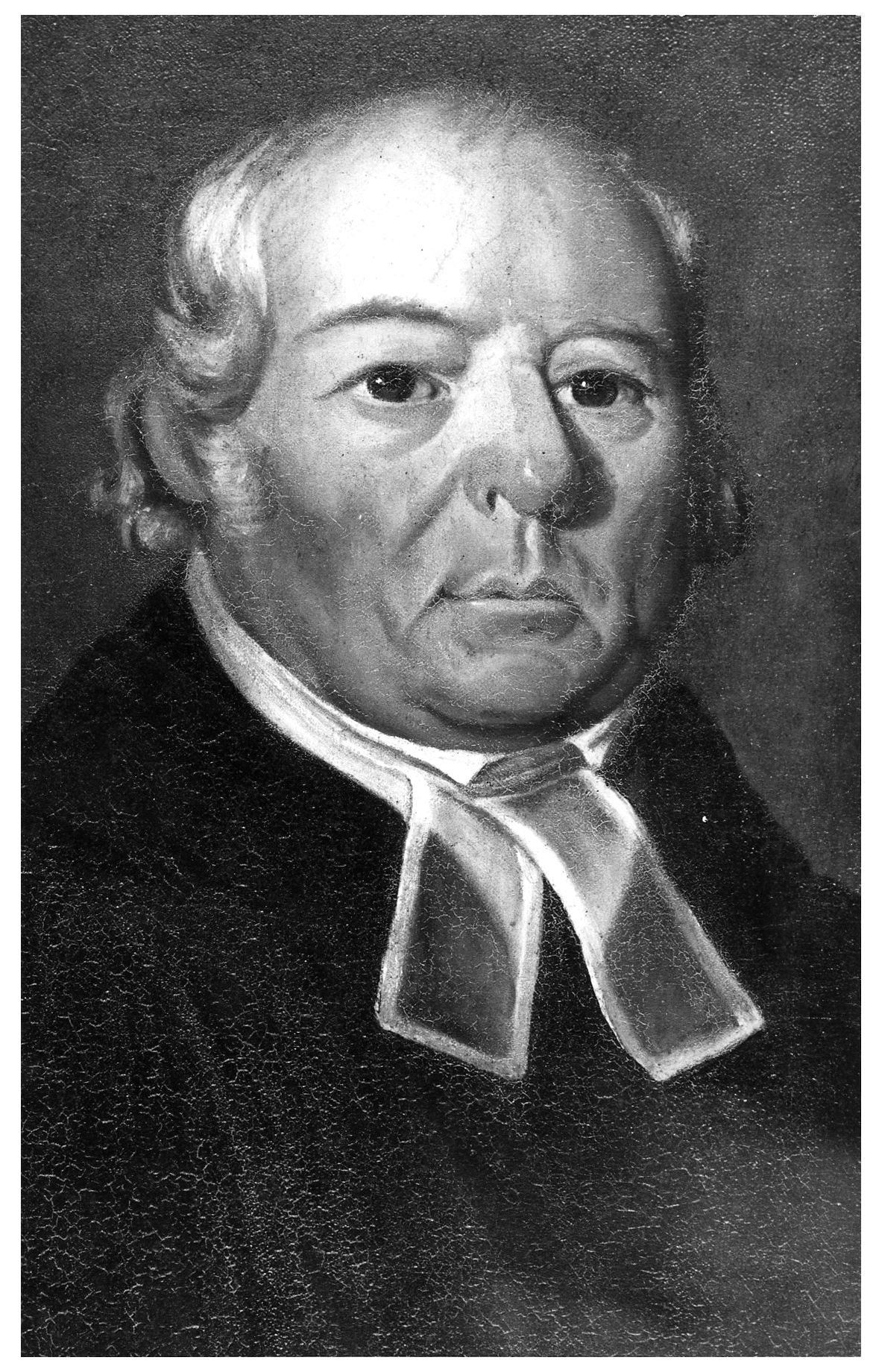
On Christmas Day, 1814, Samuel Marsden preached the first Christian sermon in Aotearoa at Rangihoua Bay, Bay of Islands, hosted by Ngapuhi chief Ruatara.
Marsden and Ruatara first met a few years prior in 1809 when Marsden found a deathly ill Ruatara on an Australian bound convict ship, nursing him back to health and inviting Ruatara to his home in Parramatta, where from there a strong friendship ensued. Between 1809-1814 Marsden also befriended other Maori who he had stay at his home in Parramatta, and Marsden learned the Maori language. During that time, Marsden became increasingly interested in establishing a Christian mission in New Zealand and in 1813, upon becoming greatly concerned with the European settlers massacring and corrupting the Pacific Island and Maori people of New Zealand, successfully lobbied the Church Missionary Society to make him president of a New South Wales chapter of the society, and in charge of leading a mission to New Zealand.
In March 1814, Marsden appointed three missionaries to embark on an investigative journey to New Zealand where, upon their arrival, met with Ruatara as well as two other Rangatira, Korokoro and Hongi Hika, from the Ngapuhi tribe who controlled the Bay of Islands region, and who agreed to the proposed establishment of the Christian mission. On December 24, 1814, Marsden along with the three missionaries and other prospective settlers arrived in Rangihoua Bay, where Marsden delivered the first New Zealand Christian sermon the following day to a 400 strong congregation.
On 24 February, 1815, Marsden exchanged 12 axes with Ruatara for 200 acres of land to build the Christian mission. Ruatara, who was ill, died a few weeks later, and Marsden returned to Parramatta, leaving the missionaries to build the Christian Society settlement under the management of one of the missionaries Thomas Kendall.
The years following were not without significant issues, including the, supposed to be banned, trade of muskets with the Maori, particularly the Ngapuhi chief Hongi Hika, leading to subsequent devastation of neighbouring tribes during what has become known as the ‘Musket Wars’. The influx of whaler, sealer, and trader European settlers and the diseases and alcohol they brought with them caused further devastation to the Maori people, and the subsequent increase in settlers, leading to the war, and invasion and confiscation of Maori land by the British, obviously was of considerable hindrance to the efforts of the Christian mission which, in stark contrast to the non-missionary European settlers, enjoyed much more peaceful and respectful relationships with the Maori. Despite these hindrances, Christianity was adopted by many Maori who took ownership of spreading the Gospel around Aotearoa, becoming a dominant faith of Maori by the 1830’s.
With many of the European non-Christian settlers also coming to know God, Aotearoa became a largely Christian nation by the end of the 19th century and, although sadly moving away from Christianity in recent times, current day New Zealand still enjoys the benefits of a society shaped by Christian values such as non-violent resolution, compassion, honesty, helping the less fortunate, and social justice. It is only through knowing the God of the Bible that societies are transformed, a society that works for all people, and this is really truly something worth fighting for.
Archives New Zealand from New Zealand, CC BY-SA 2.0 https://creativecommons.org/licenses/by-sa/2.0, via Wikimedia Commons